How to Read Your Form 1099-R
What is Form 1099-R?
Form 1099-R reports distributions from pensions, annuities, retirement plans, IRAs, insurance contracts, and other similar sources. If you received $10 or more from these sources during the tax year, you should receive this form from the payer by January 31st.
Form 1099-R Sample
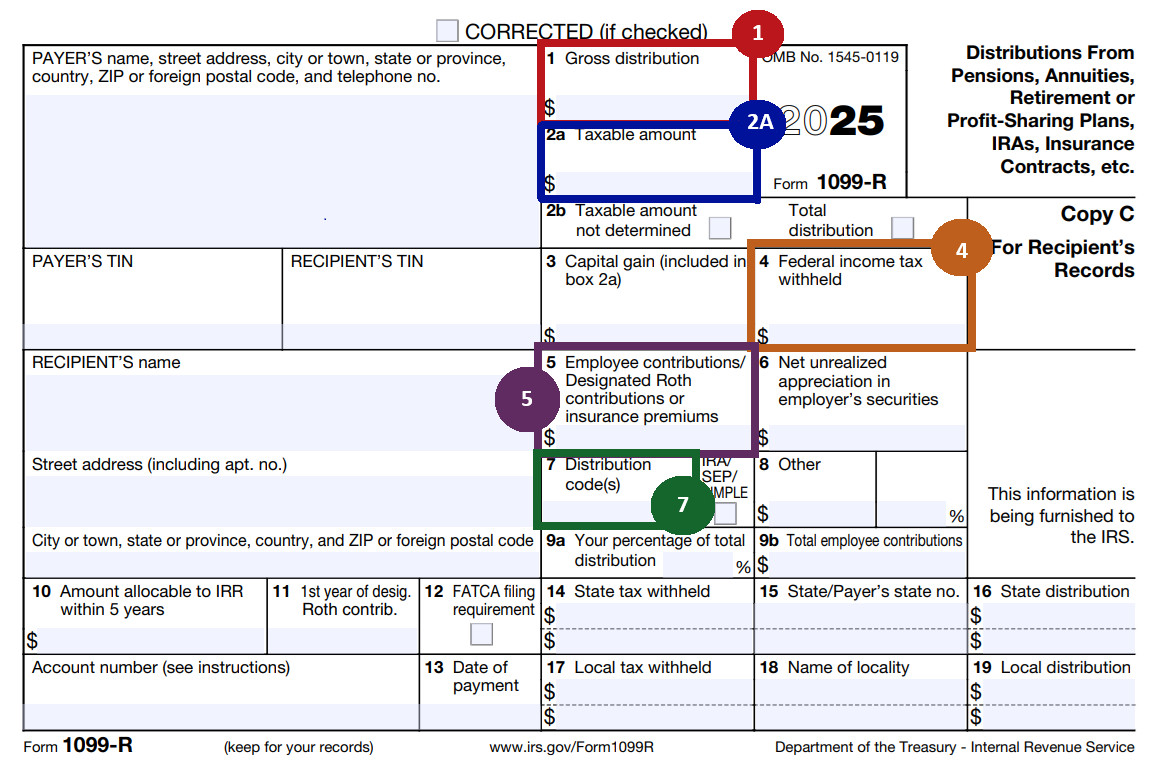
Figure: Example 2025 Form 1099-R with key boxes highlighted (numbered circles). See the colored legend below for box identification.
Key Boxes Highlighted:
1
Box 1
2a
Box 2a
4
Box 4
5
Box 5
7
Box 7
Key Boxes to Understand
| Box |
Label |
What it Means |
| 1 |
Gross Distribution |
Total amount of your pension or retirement distribution before any taxes or deductions. |
| 2a |
Taxable Amount |
The portion you must report as income on your federal tax return. This is typically less than Box 1 because it excludes amounts you already paid taxes on. |
| 4 |
Federal Income Tax Withheld |
Amount of federal tax already withheld from your distribution and sent to the IRS on your behalf. You can claim this as a credit on your tax return. |
| 5 |
Employee Contributions / Designated Roth Contributions |
The portion of your distribution that represents your after-tax contributions. You already paid taxes on this money, so you won't be taxed again. Also known as your "cost basis." |
| 7 |
Distribution Code(s) |
IRS code identifying the type of distribution you received. Common codes: 1 (early distribution with potential penalty), 2 (early distribution, exception applies), 4 (death distribution), 7 (normal distribution), G (direct rollover). |
Additional Resources
Need Help? Consult with a qualified tax professional regarding your specific tax situation.